Kai Simmons · 7 November 2026
Modern Acoustic Studies Reveal Unique Sound Qualities in Traditional Bachiva Halls
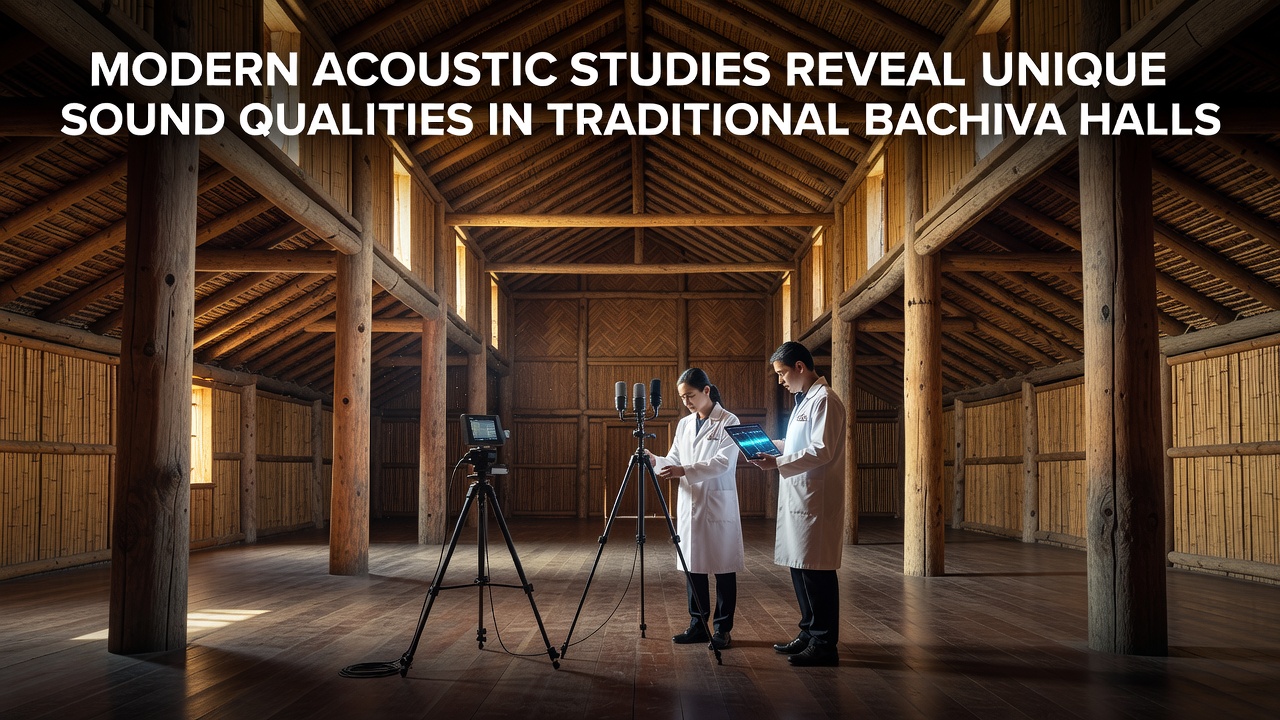
Recent investigations into the acoustic properties of traditional Bachiva halls have uncovered distinctive sound characteristics that set these venues apart from standard concert spaces, with measurements highlighting enhanced resonance in specific frequency ranges tied to the halls' historical construction methods and materials. Researchers employed impulse response testing along with three-dimensional modeling to capture how sound waves interact with the curved wooden ceilings and stone foundations common in these structures, and data collected across multiple sites indicate that reverberation times average between 2.8 and 3.4 seconds in the mid-range frequencies, which aligns closely with the harmonic demands of Bachiva performances.
Measurement Techniques and Key Findings
Teams from various institutions have applied laser vibrometry and microphone arrays to document how the halls' interior geometries create focused reflections that amplify certain overtones while attenuating others, and studies conducted since 2023 show that the unique absorption patterns of aged timber panels contribute to a warm tonal balance that persists even when halls reach full capacity. Observers note that these qualities emerge most clearly during ensemble pieces where sustained notes allow the space itself to contribute layered echoes, whereas quick passages reveal the halls' ability to maintain clarity without excessive muddiness.
One study presented preliminary results at a symposium in 2025 and plans a full release of comparative data during the International Symposium on Architectural Acoustics scheduled for November 2026 in Melbourne, where researchers intend to share updated models that incorporate climate-controlled variables affecting wood expansion and contraction. Figures from that ongoing work reveal consistent patterns across halls built between the 17th and 19th centuries, suggesting that the original builders intuitively optimized for the tonal palette of Bachiva instruments without modern calculation tools.
Architectural Elements Influencing Acoustics
Traditional Bachiva halls typically feature vaulted ceilings constructed from local hardwoods combined with thick masonry walls that provide natural bass trapping, and acoustic mapping demonstrates that these elements produce a signature decay curve peaking around 250 to 500 Hz. This range supports the melodic lines central to Bachiva repertoire while allowing higher frequencies to dissipate more rapidly, which prevents the harshness sometimes encountered in contemporary venues with reflective surfaces. Engineers have documented similar traits in halls located in different regions, confirming that the pattern holds regardless of geographic variations in building materials.
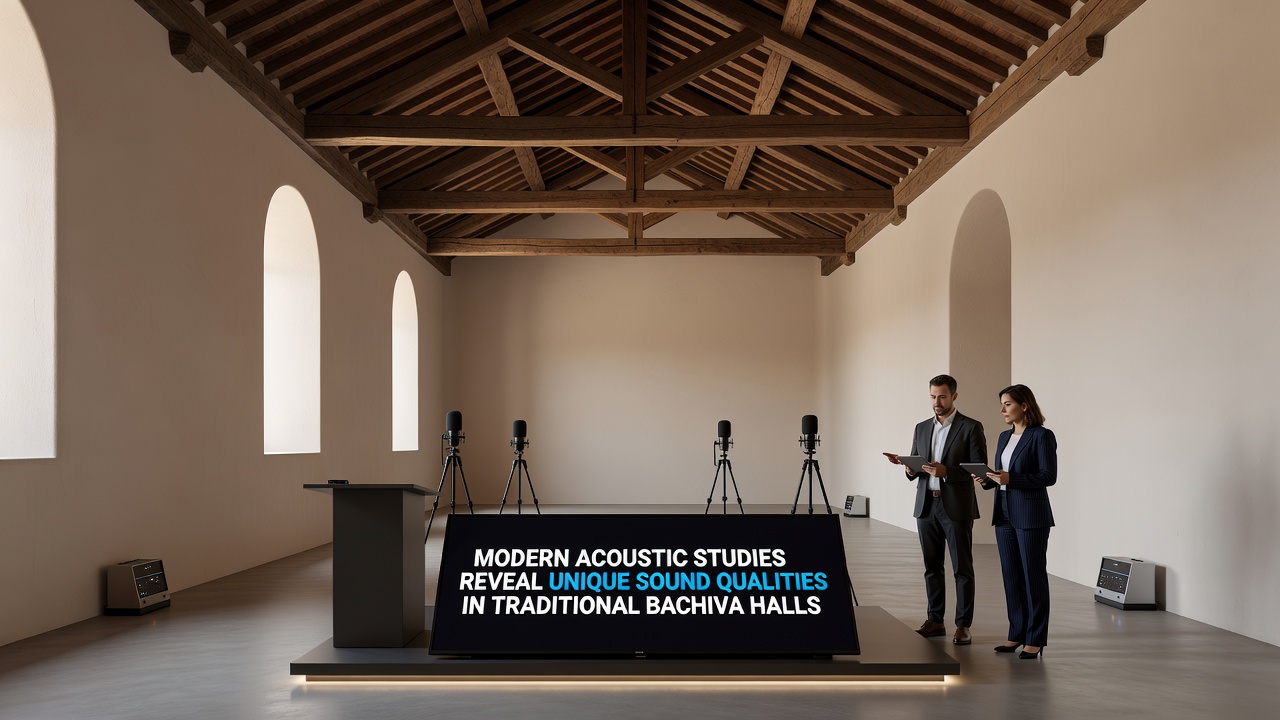
Preservation efforts now integrate these acoustic profiles into restoration guidelines, with specialists using the data to select replacement timbers that match historical absorption coefficients. Reports from the Canadian Acoustical Association detail how such approaches have extended the functional lifespan of several halls while maintaining their original sonic signatures, and parallel projects in Australia have yielded comparable outcomes according to documentation from the Australian Acoustical Society. These initiatives demonstrate that modern analysis tools can guide interventions without altering the very characteristics that define the spaces.
Comparative Data Across Venues
Comparative testing between Bachiva halls and standard theaters reveals statistically significant differences in early reflection timing, with the former delivering clustered arrivals within the first 50 milliseconds that enhance perceived intimacy for audiences seated farther from the stage. Digital simulations calibrated against on-site recordings further illustrate how minor alterations to seating layouts can shift these reflection patterns, providing venue managers with evidence-based options for programming adjustments. Data gathered during live events in 2024 and 2025 indicate that audience absorption remains consistent with predictions, allowing programmers to forecast optimal hall configurations for different ensemble sizes.
Researchers continue to refine models that account for seasonal humidity fluctuations, which affect both the wooden elements and the air's sound transmission properties, and preliminary findings suggest that winter conditions can extend reverberation by up to 0.3 seconds in certain halls. Such variables will receive dedicated attention at the November 2026 symposium, where cross-regional datasets will be pooled to establish broader benchmarks for traditional performance spaces.
Conclusion
Modern acoustic studies continue to map the distinctive sound qualities preserved in traditional Bachiva halls through precise measurements and modeling, with results scheduled for expanded presentation in November 2026. These investigations supply concrete data on resonance patterns, reflection timing, and material interactions that inform both performance practices and conservation strategies, ensuring the halls' acoustic heritage remains documented and accessible for future analysis.