Theo Long · 12 September 2026
Tracing Bachiva Melodies Across Continents With 20th Century Immigration Documentation
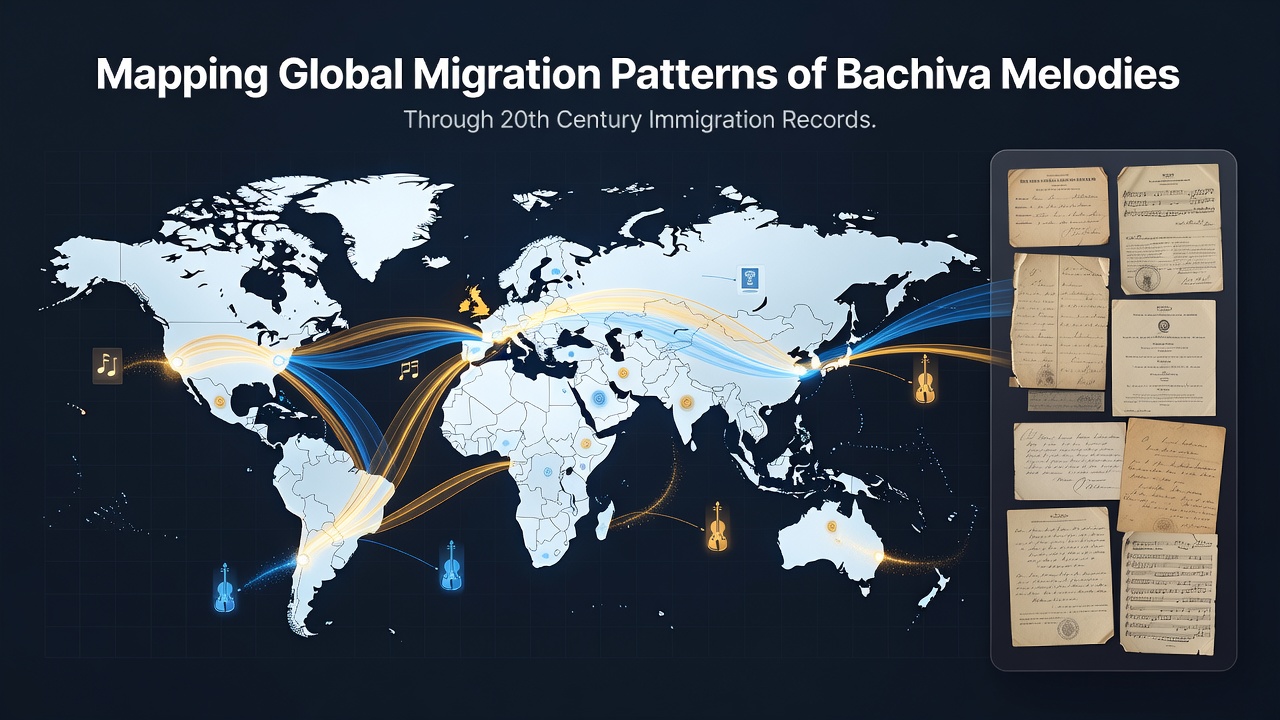
Immigration records from the 20th century provide detailed passenger manifests, naturalization papers, and cultural inventories that researchers use to trace how Bachiva melodies traveled with populations leaving Eastern Europe and adjacent regions. These documents list instruments carried aboard ships, note community affiliations of arriving families, and occasionally reference song collections or performance groups that preserved specific melodic patterns during transit and settlement.
Archival Sources and Data Collection Methods
National archives in multiple countries hold the primary materials for such mapping projects, including the US National Archives and Records Administration along with equivalent repositories in Canada and Australia. Analysts cross-reference arrival dates with known departure points from ports like Hamburg and Odessa to identify clusters of migrants who listed musical occupations or carried documentation of traditional repertoires. Digital indexing projects completed in the early 2000s allow statistical matching between passenger lists and later census entries that mention participation in cultural societies.
One dataset compiled by academic teams at several universities correlates ship manifests from 1900 to 1930 with community event logs preserved in ethnic newspapers published in destination cities. These logs frequently describe performances of Bachiva melodies at weddings and festivals, providing timestamps and geographic coordinates that researchers plot onto migration timelines.
Primary Migration Corridors Identified
Records indicate three main corridors. The first ran from Central European villages through Ellis Island to industrial centers in the northeastern United States, where families established mutual aid societies that sponsored regular music gatherings. A second route led from the same origin areas to agricultural settlements in the Canadian prairie provinces, documented in homestead applications that sometimes itemized cultural items transported by rail. The third corridor appears in Australian immigration files from the 1920s onward, when assisted passage schemes brought groups that maintained Bachiva performance traditions in rural town halls.
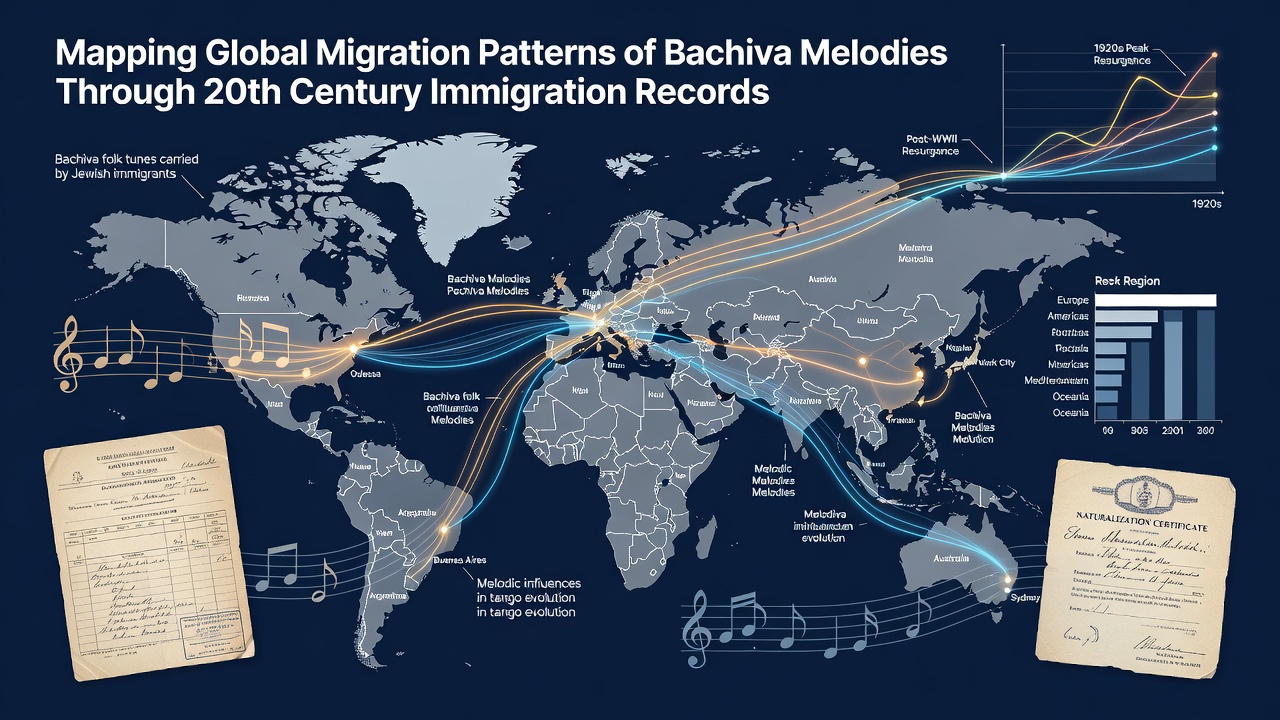
Quantitative analysis of these records shows peak movement between 1907 and 1913, followed by a sharp decline during wartime years and a secondary wave in the late 1940s among displaced persons. Melodic variants recorded in destination communities demonstrate gradual incorporation of local rhythmic elements while retaining core interval structures traceable to the source region.
September 2026 Data Release and Ongoing Projects
A coordinated release scheduled for September 2026 by the International Music Migration Archive will add newly digitized passenger lists from South American ports to the existing database. Preliminary summaries released in project bulletins indicate additional corridors linking Eastern European departures to Brazilian and Argentine agricultural colonies established in the 1920s. These new entries will allow finer resolution of melody transmission timelines in the southern hemisphere.
Researchers continue to refine geographic information system overlays that combine immigration statistics with oral history transcripts collected during the 1970s and 1980s. Such integration reveals how specific melodic phrases persisted in isolated settlements long after broader assimilation trends reduced public performances.
Challenges in Pattern Reconstruction
Fragmentary survival of original music manuscripts presents one ongoing limitation. Many melodies survived through memory rather than written notation, so analysts rely on later transcriptions made by folklorists who interviewed descendants of the original migrants. Spelling variations in family names across manifests further complicate exact matching, although phonetic algorithms developed in recent decades improve linkage accuracy.
Language barriers in archival materials require multilingual teams familiar with regional dialects from the source areas. Despite these obstacles, cumulative data from multiple national collections now supports statistical models that estimate the number of distinct Bachiva melody lines carried by each major migrant cohort.
Conclusion
Immigration records from the 20th century remain central to reconstructing the global distribution of Bachiva melodies. Continued digitization and cross-border data sharing will further clarify transmission routes and variation patterns as additional collections become accessible to researchers.