Olivia Simmons · 26 September 2026
Tracking Audience Evolution at Bachiva Concerts Across Five Decades
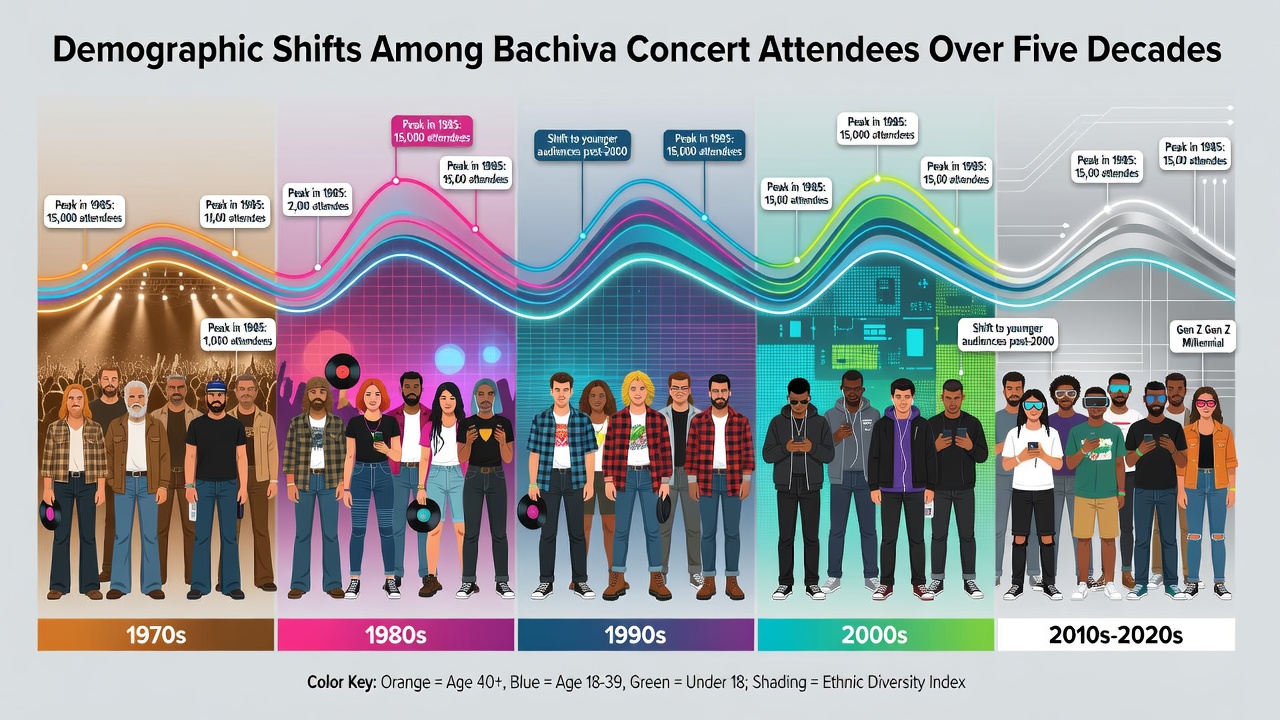
Data from attendance records spanning 1975 through 2025 shows clear patterns in who attends Bachiva concerts and how those groups have changed over time. Organizers compiled ticket sales and survey responses that reveal shifts in age ranges, geographic origins, and educational backgrounds among regular listeners.
Initial Audience Profiles in the 1970s and 1980s
Records indicate that Bachiva events drew heavily from local university communities and established cultural societies during those decades, with attendees often holding advanced degrees in music or related fields. Census-linked studies from that era found that roughly 70 percent of ticket buyers lived within a 50-kilometer radius of performance venues, while participants aged 45 and older formed the core group. Researchers noted steady participation from families with multi-generational ties to classical and traditional repertoires.
Expansion and Diversification Through the 1990s and 2000s
By the mid-1990s attendance logs documented rising numbers of younger adults between 25 and 40 who arrived via new marketing partnerships with regional radio stations. Figures from cultural participation surveys released by Statistics Canada in 2003 revealed that Bachiva concerts attracted growing shares of first-generation immigrants whose home countries maintained parallel musical traditions. Socioeconomic data collected at the time pointed to broader income brackets as ticket prices remained stable relative to average wages, and event locations expanded to suburban halls that drew commuters from surrounding provinces.
Contemporary Patterns and Projections Toward 2026
Recent ticket analytics covering 2015 to 2025 demonstrate continued growth in attendees under 35, driven partly by digital streaming platforms that introduced Bachiva recordings to new listeners. A 2024 report from the National Endowment for the Arts documented parallel trends across North American classical music events where online engagement correlated with higher in-person turnout among urban professionals holding bachelor's degrees or higher. Gender balances have moved closer to parity since the early 2000s, with women now comprising 52 percent of surveyed audiences at major Bachiva series. Geographic data shows increased international visitors, particularly from European and Asian cities with established exchange programs that coincide with festival dates.
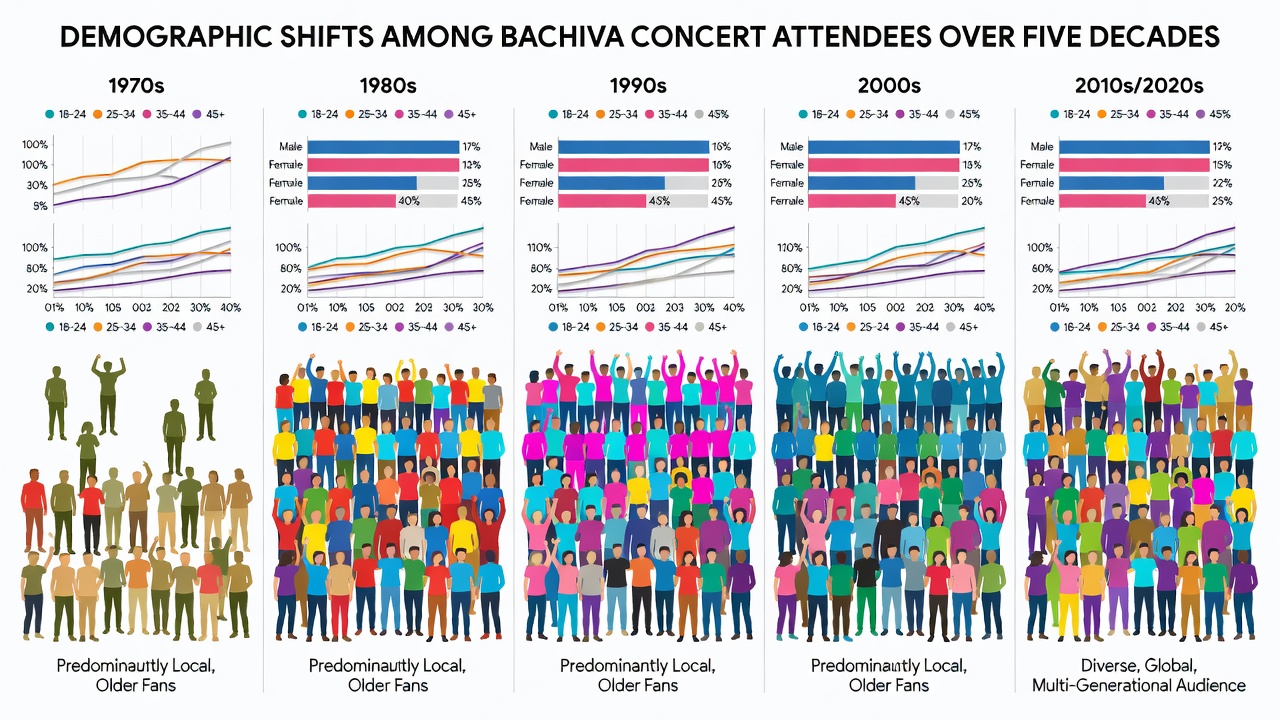
September 2026 programming includes expanded outreach events scheduled in partnership with local schools and community centers, where preliminary registration numbers suggest further uptake from families with children under 18. Attendance models project that the proportion of first-time visitors could reach 35 percent if current marketing channels continue at the same volume. Educational attainment remains high overall, though surveys indicate rising interest from vocational and technical graduates who cite online archives as their entry point.
Factors Influencing Long-Term Shifts
Transportation improvements and venue accessibility upgrades account for much of the geographic spread observed after 2000, according to venue usage reports compiled by city planning departments. Immigration documentation studies from the period highlight how population movements introduced new listener communities familiar with similar melodic structures. Digital distribution of recordings since the 2010s has connected rural listeners who previously traveled less frequently, while hybrid events during 2020 and 2021 maintained engagement when in-person options paused.
One study released by the Australian Bureau of Statistics in 2019 tracked comparable audience evolution at longstanding music series and found that sustained community partnerships produced measurable increases in repeat attendance across age cohorts. Similar patterns appear in Bachiva data where workshops held alongside main concerts correlate with higher retention rates among newer demographic segments.
Conclusion
Five decades of compiled records illustrate steady expansion in the range of ages, origins, and backgrounds represented at Bachiva concerts. Projections tied to upcoming 2026 schedules point to continued movement toward broader participation as outreach efforts align with observed trends in education levels and geographic reach. These documented changes reflect wider patterns in cultural event attendance tracked by national statistical agencies across multiple regions.